
 京公网安备11010802034965号
京ICP备13020181号-2
京公网安备11010802034965号
京ICP备13020181号-2
《中国塑料》编辑部 ©2008-2024 版权所有
地址:北京市海淀区阜成路11号 邮编:100048
编辑部:010-68985541 联系信箱:cp@plaschina.com.cn
广告部/发行部:010-68985253 本系统由北京玛格泰克科技发展有限公司设计开发

中国塑料 ›› 2025, Vol. 39 ›› Issue (12): 72-78.DOI: 10.19491/j.issn.1001-9278.2025.12.012
雷经发1,2, 吴文奇1, 孙虹1,2( ), 刘涛1,2, 王璐1,2
收稿日期:2024-12-19
出版日期:2025-12-26
发布日期:2025-12-22
通讯作者:
孙虹(1978-),硕士,副教授,研究方向为检测技术与自动化装置,sunhong2014@163.com基金资助:
LEI Jingfa1,2, WU Wenqi1, SUN Hong1,2(), LIU Tao1,2, WANG Lu1,2
Received:2024-12-19
Online:2025-12-26
Published:2025-12-22
Contact:
SUN Hong
E-mail:sunhong2014@163.com
摘要:
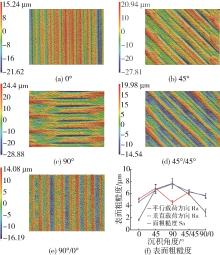
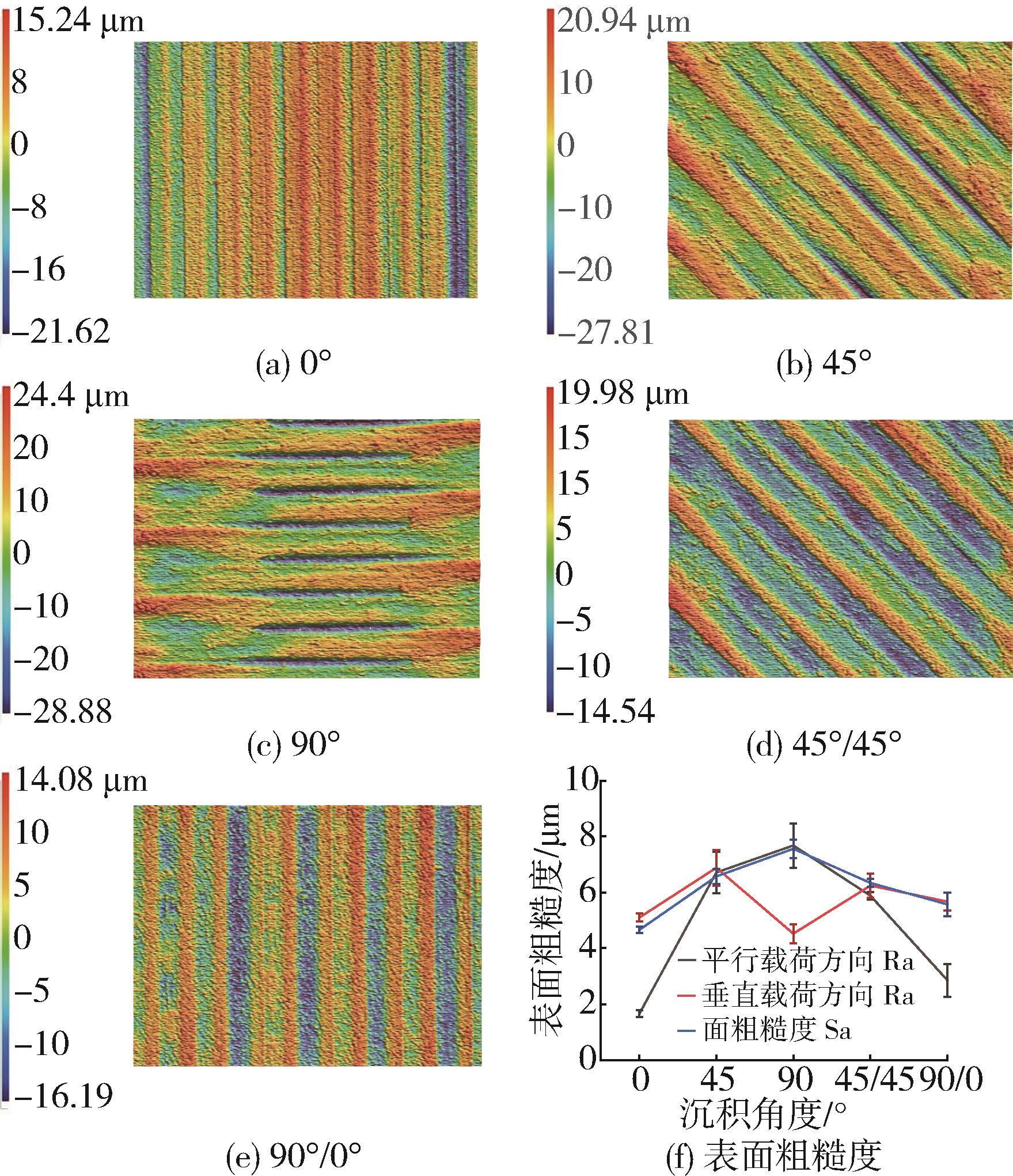
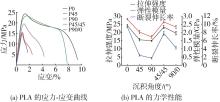
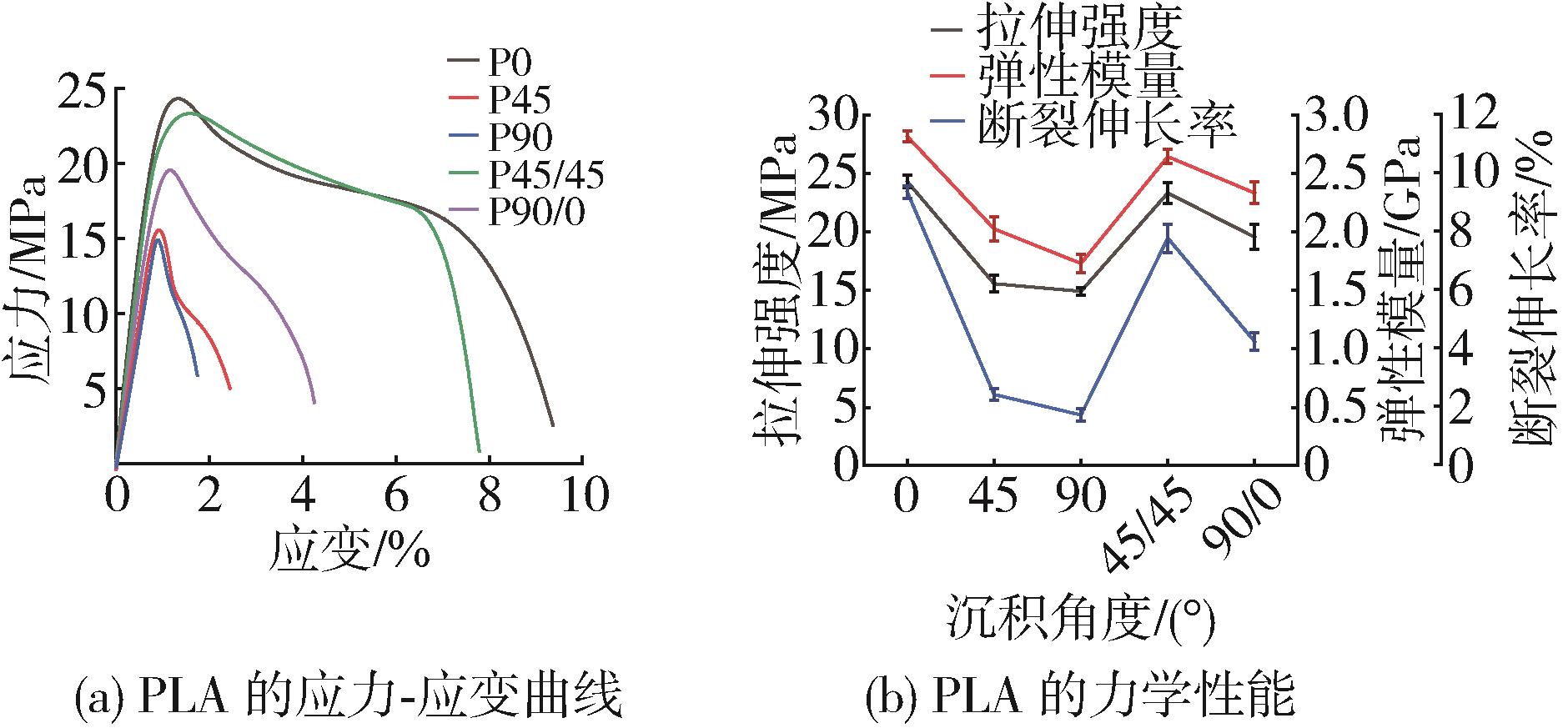
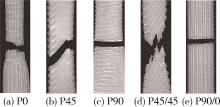
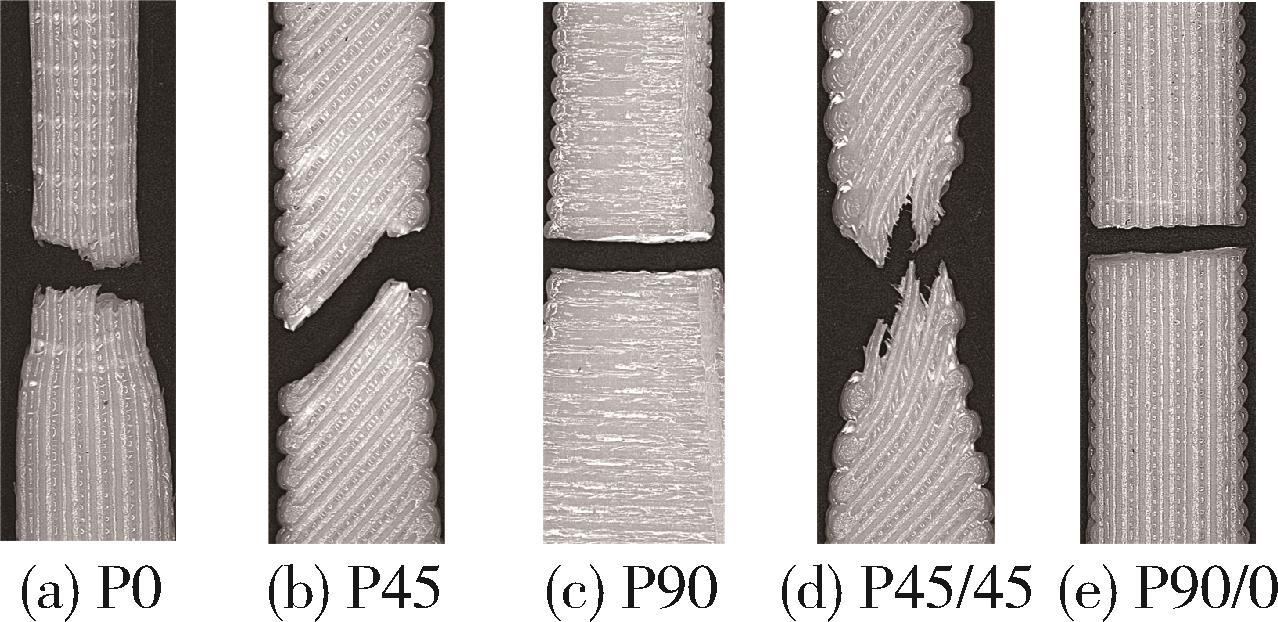
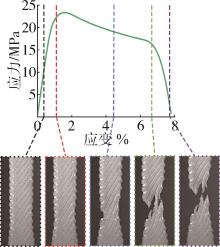
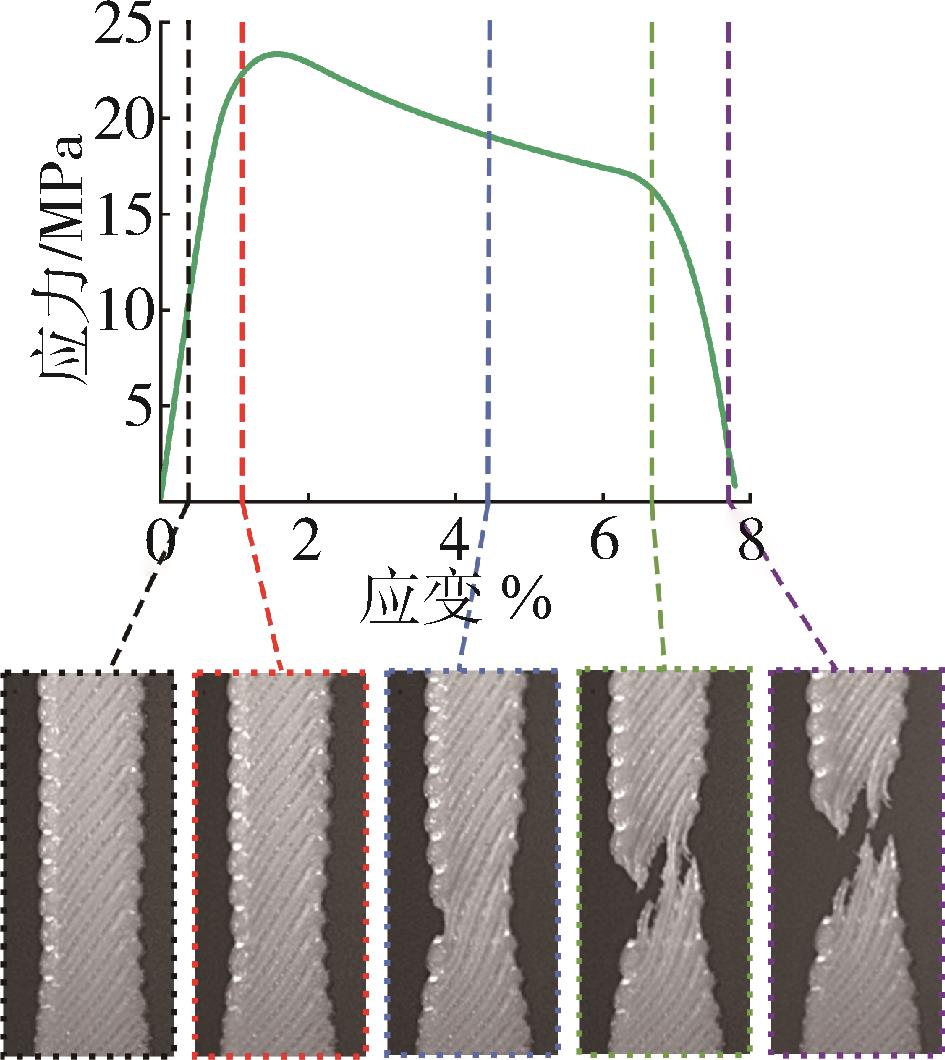
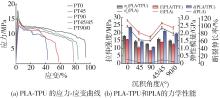
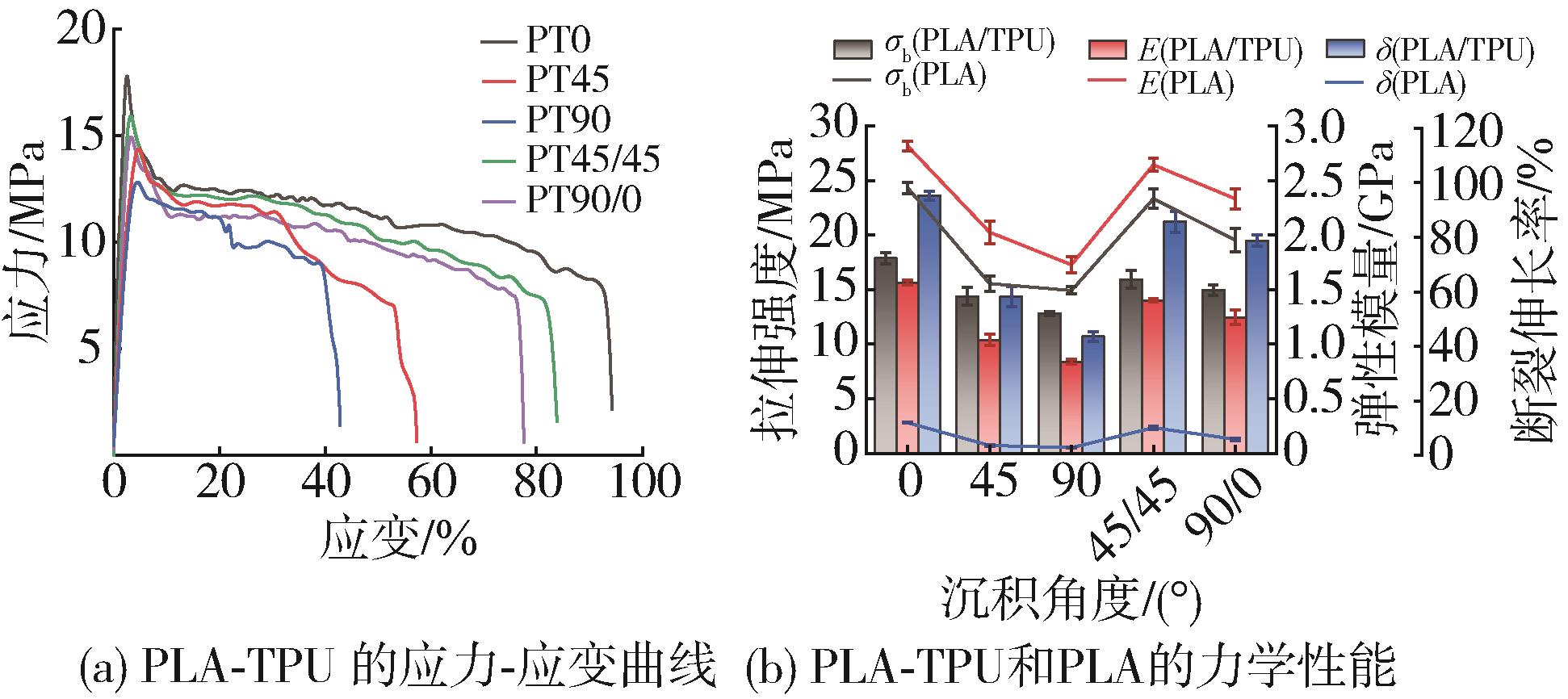
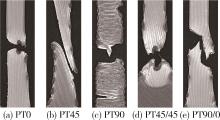
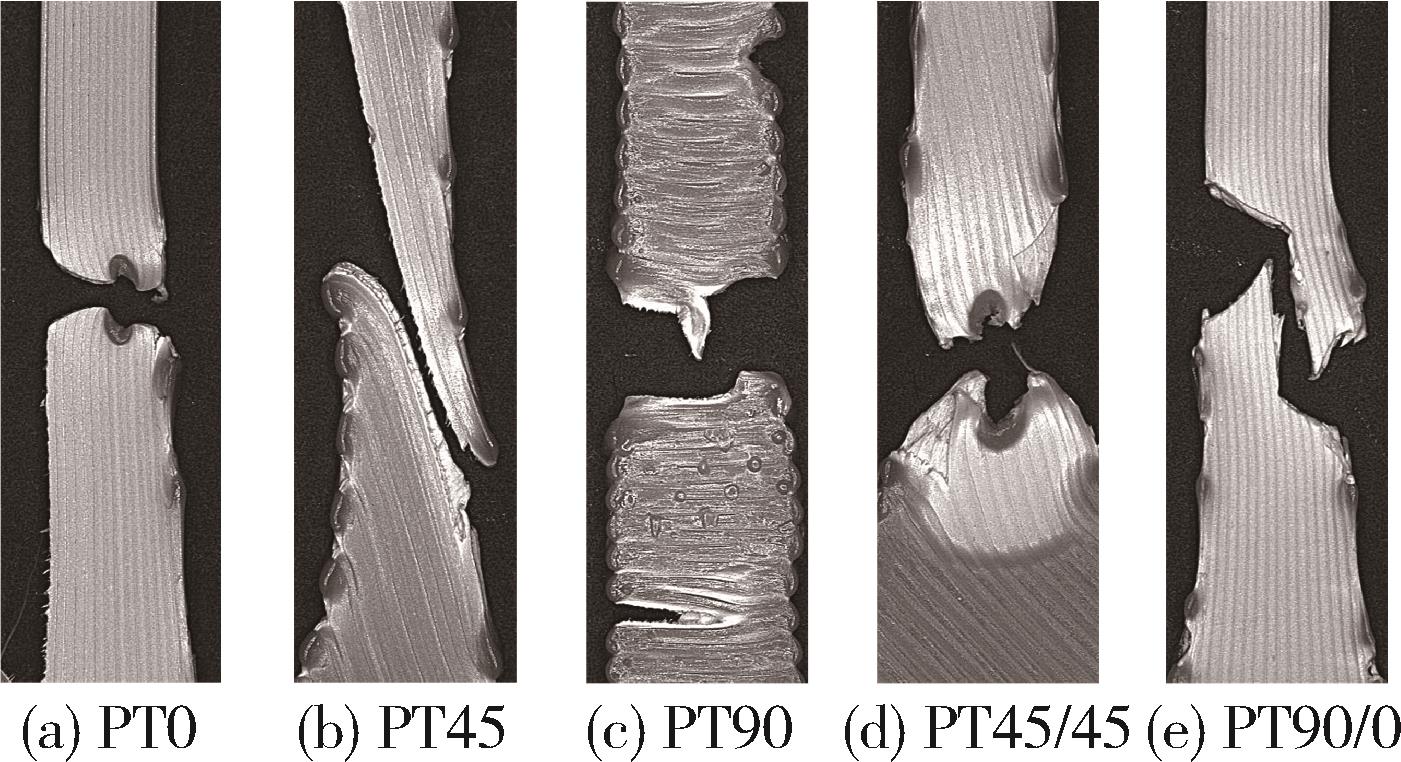
采用熔融共混法制备聚乳酸(PLA)/热塑性聚氨酯弹性体(TPU)复合线材,再经熔融沉积成型(FDM)以五种沉积角度(0 °、45 °、90 °、45 °/45 °、90 °/0 °)制得PLA/TPU共混试样。研究了沉积角度对力学性能和破坏模式的影响以及TPU改性PLA基共混物用于FDM的增韧效果。结果表明,沉积角度对力学性能和表面粗糙度影响显著,单向沉积角度α为0°时力学性能最佳,表面粗糙度Sa值最低,TPU对PLA增韧效果较好,5种沉积角度的试样断裂伸长率平均提高了16倍以上(1 649.12 %),拉伸强度和弹性模量平均降低了20.72 %和47.65 %;FDM试样在单轴拉伸加载下具有两种破坏模式,可以通过调控沉积角度来实现相互转换;细丝扭转现象是影响交替沉积试样的断裂伸长率比单向沉积更高的关键因素。
中图分类号:
雷经发, 吴文奇, 孙虹, 刘涛, 王璐. 单向/交替沉积角度对FDM PLA/TPU共混物力学性能的影响[J]. 中国塑料, 2025, 39(12): 72-78.
LEI Jingfa, WU Wenqi, SUN Hong, LIU Tao, WANG Lu. Influence of unidirectional/alternating deposition angles on the mechanical properties of FDM PLA/TPU blends[J]. China Plastics, 2025, 39(12): 72-78.
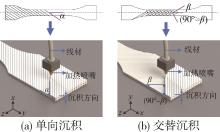
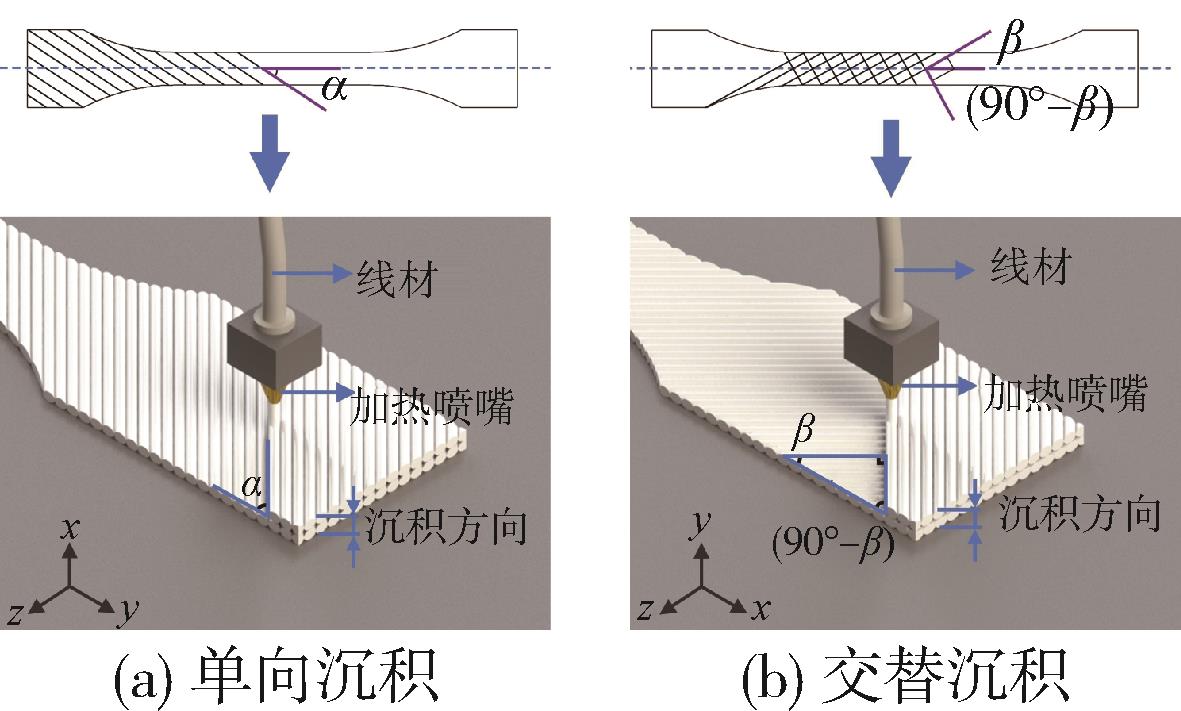
| 材料成分 | 沉积角度 | 试样编号 |
|---|---|---|
| PLA | 0 ° | P0 |
| 45 ° | P45 | |
| 90 ° | P90 | |
| 45 °/45 ° | P45/45 | |
| 90 °/0 ° | P90/0 | |
| PLA/TPU | 0 ° | PT0 |
| 45 ° | PT45 | |
| 90 ° | PT90 | |
| 45 °/45 ° | PT45/45 | |
| 90 °/0 ° | PT90/0 |
| 材料成分 | 沉积角度 | 试样编号 |
|---|---|---|
| PLA | 0 ° | P0 |
| 45 ° | P45 | |
| 90 ° | P90 | |
| 45 °/45 ° | P45/45 | |
| 90 °/0 ° | P90/0 | |
| PLA/TPU | 0 ° | PT0 |
| 45 ° | PT45 | |
| 90 ° | PT90 | |
| 45 °/45 ° | PT45/45 | |
| 90 °/0 ° | PT90/0 |
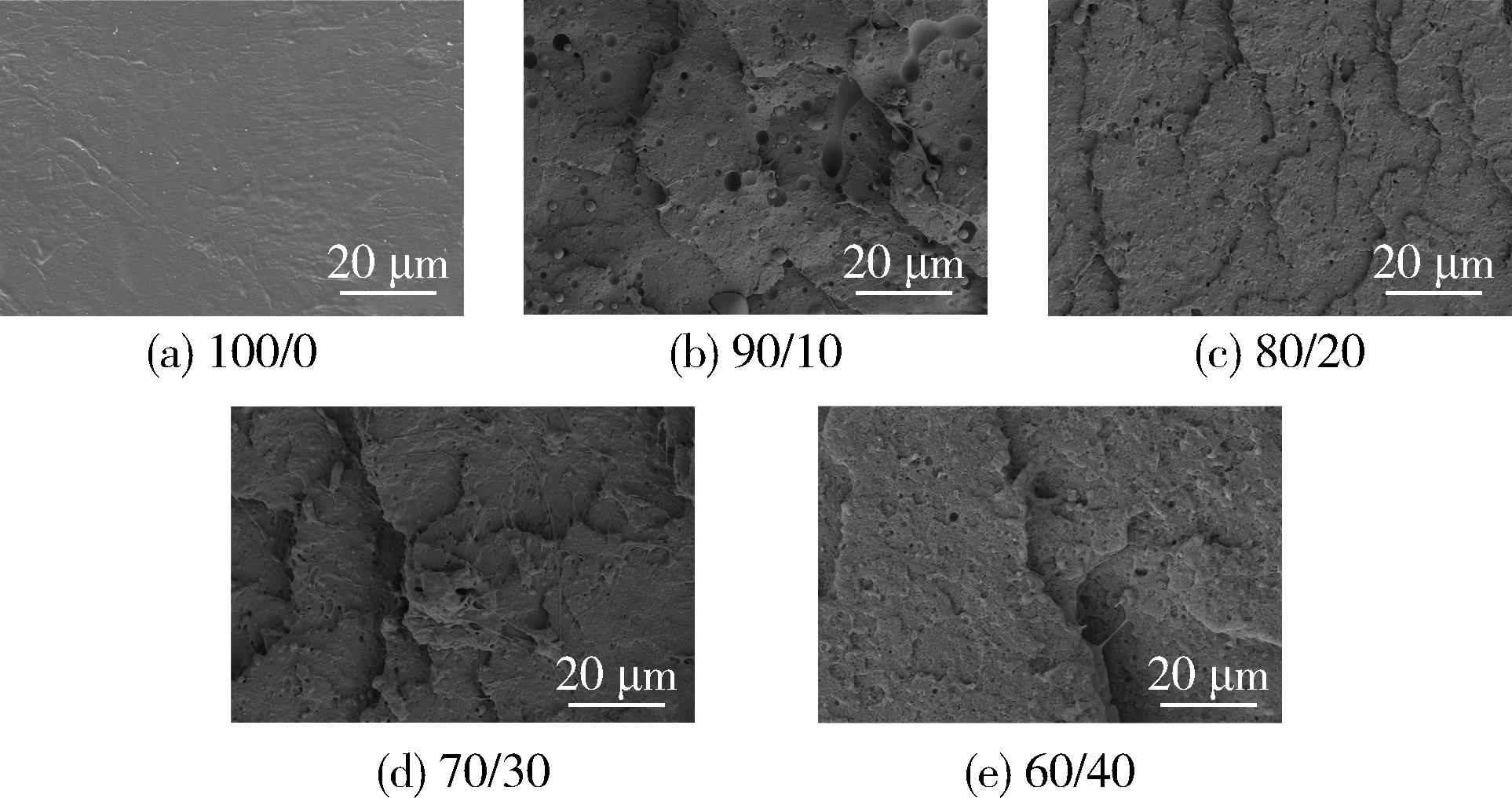
| [1] | Lalegani Dezaki M, Mohd Ariffin M K A, Hatami S. An overview of fused deposition modelling (FDM): Research, development and process optimisation[J]. Rapid Prototyping Journal, 2021, 27(3): 562⁃582. |
| [2] | 黄宸超,刘朝政,杨 蕊,等.熔融沉积打印微纳米生物质填料增强聚乳酸基复合材料的研究进展[J].复合材料学报,2023,40(12):6471⁃6487. |
| HUANG C C, LIU C Z, YANG R, et al. Research progress of biomass⁃based micro⁃nano filler reinforcing polylactic acid matrix composites printed by fused deposition modeling[J]. Acta Materiae Compositae Sinica, 2023, 40(12): 6 471⁃6 487. | |
| [3] | Li S, Cheng P, Ahzi S, et al. Advances in hybrid fibers reinforced polymer⁃based composites prepared by FDM: a review on mechanical properties and prospects[J]. Composites Communications, 2023, 40: 101592. |
| [4] | Scipioni S I, Pace F, Paoletti A, et al. Mechanical characterization of FDM components made of polyaryletherketone (PAEK) for aerospace applications: a comparison of direct printing and box⁃cut sample manufacturing strategies[J]. The International Journal of Advanced Manufacturing Technology, 2024, 134(11): 5 615⁃5 629. |
| [5] | M’Bengue M S, Mesnard T, Chai F, et al. Evaluation of a medical grade thermoplastic polyurethane for the manufacture of an implantable medical device: the impact of FDM 3D⁃printing and gamma sterilization[J]. Pharmaceutics, 2023, 15(2): 456. |
| [6] | Romero P E, Arribas⁃Barrios J, Rodriguez⁃Alabanda O, et al. Manufacture of polyurethane foam parts for automotive industry using FDM 3D printed molds[J]. CIRP Journal of Manufacturing Science and Technology, 2021, 32: 396⁃404. |
| [7] | Lee C H, Padzil F N B M, Lee S H, et al. Potential for natural fiber reinforcement in PLA polymer filaments for fused deposition modeling (FDM) additive manufacturing: A review[J]. Polymers, 2021, 13(9): 1 407. |
| [8] | 胡艺伟,李亚智,李彪,等.纤维增强聚合物基复合材料熔融堆积成型技术的研究进展及产品的力学性能[J].复合材料学报,2021,38(04):979⁃996. |
| HU Y W, LI Y Z, LI B, et al. 3D printed fibre⁃reinforced polymer composites⁃Review of the fused depositionmodeling process and mechanical performance of products[J]. Acta Materiae Compositae Sinica, 2021, 38(04): 979⁃996. | |
| [9] | Amazani H, Kami A. Metal FDM, a new extrusion⁃based additive manufacturing technology for manufacturing of metallic parts: a review[J]. Progress in Additive Manufacturing, 2022, 7(4): 609⁃626. |
| [10] | Taib N A A B, Rahman M R, Huda D, et al. A review on poly lactic acid (PLA) as a biodegradable polymer[J]. Polymer Bulletin, 2023, 80(2): 1 179⁃1 213. |
| [11] | Tümer E H, Erbil H Y. Extrusion⁃based 3D printing applications of PLA composites: a review[J]. Coatings, 2021, 11(4): 390. |
| [12] | Bhagia S, Bornani K, Agrawal R, et al. Critical review of FDM 3D printing of PLA biocomposites filled with biomass resources, characterization, biodegradability, upcycling and opportunities for biorefineries[J]. Applied Materials Today, 2021, 24: 101078. |
| [13] | 马秀清,劳志超,李明谦,等.3D打印工艺参数对PLA/PTW共混物力学性能影响的研究[J].中国塑料,2024,38(2):70⁃75. |
| MA X Q, LAO Z C, LI M Q, et al. Effect of 3D printing process parameters on mechanical properties of PLA/PTW blends[J]. China Plastics, 2024, 38(2): 70⁃75. | |
| [14] | 崔峰波,张 萍,冉文华,等.3D打印玻璃纤维增强聚乳酸性能评估[J].工程塑料应用,2023,51(2):29⁃33. |
| CUI F B, ZHANG P, RAN W H, et al. Performance evaluation of 3D printing glass fiber reinforced polylactic acid[J]. Engineering Plastics Application, 2023, 51(2): 29⁃33. | |
| [15] | Desai S M, Sonawane R Y, More A P. Thermoplastic polyurethane for three⁃dimensional printing applications: A review[J]. Polymers for Advanced Technologies, 2023, 34(7): 2 061⁃2 082. |
| [16] | Rahmatabadi D, Ghasemi I, Baniassadi M, et al. 3D printing of PLA⁃TPU with different component ratios: Fracture toughness, mechanical properties, and morphology[J]. Journal of Materials Research and Technology, 2022, 21: 3 970⁃3 981. |
| [17] | 赵 静,魏天路,陈兴强,等.熔融沉积3D打印PLA制件力学性能影响因素及其数学模型[J].塑料工业,2022,50(7):91⁃96. |
| ZHAO J, WEI T L, CHEN X Q, et al. Influence Factors and Mathematical Model of Mechanical Properties of FDM 3DPrinting PLA Parts[J]. China Plastics Industry. 2022, 50(7): 91⁃96. | |
| [18] | Sandanamsamy L, Mogan J, Rajan K, et al. Effect of process parameter on tensile properties of FDM printed PLA[J]. Materials Today: Proceedings, 2024, 109: 1⁃6. |
| [19] | Rajpurohit S R, Dave H K. Effect of process parameters on tensile strength of FDM printed PLA part[J]. Rapid Prototyping Journal, 2018, 24(8): 1 317⁃1 324. |
| [20] | 李 薇,夏新曙,林鸿裕,等.熔融沉积方式对PLA/TPU体系冲击性能的影响[J].中国塑料,2019,33(9):21⁃26. |
| LI W, XIA X S, LIN H Y, et al. Effect of fused deposition style on impact properties of PLA/TPU blends[J]. China Plastics, 2019, 33(9): 21⁃26. | |
| [21] | Kiendl J, Gao C. Controlling toughness and strength of FDM 3D⁃printed PLA components through the raster layup[J]. Composites Part B: Engineering, 2020, 180: 107562. |
| [22] | 赵 健,刘效朋,王泽武.基于3D打印的PLA材料力学性能研究[J].塑料工业,2020,48(7):139⁃143. |
| ZHAO J, LIU X P, WANG Z W. Research on mechanical properties of PLA material based on 3D printing[J].China Plastics Industry. 2020, 48(7): 139⁃143. | |
| [23] | Çakan B G. Effects of raster angle on tensile and surface roughness properties of various FDM filaments[J]. Journal of Mechanical Science and Technology, 2021, 35: 3 347⁃3 353. |
| [24] | Hooshmand M J, Mansour S, Dehghanian A. Optimization of build orientation in FFF using response surface methodology and posterior⁃based method[J]. Rapid Prototyping Journal, 2021, 27(5): 967⁃994. |
| [25] | Gobena S T, Woldeyohannes A D. Assessments and investigation of process parameter impacts on surface roughness, microstructure, tensile strength, and porosity of 3D printed polyetherether ketone (PEEK) materials[J]. Results in Engineering, 2024, 24: 103317. |
| [26] | Karimi A, Rahmatabadi D, Baghani M. Various FDM mechanisms used in the fabrication of continuous⁃fiber reinforced composites: a review[J]. Polymers, 2024, 16(6): 831. |
| [27] | 刘彪强,钱 波,梁雨心,等.基于螺杆挤出PLA颗粒料3D打印工艺[J].工程塑料应用,2024,52(4):75⁃82. |
| LIU B Q, QIAN B, LIANG Y X, et al. 3D printing technology of PLA granular material based on screw extrusion[J]. Engineering Plastics Application, 2024, 52(4): 75⁃82. | |
| [28] | Sangwan K S, Kumar R, Herrmann C, et al. Development of a cyber physical production system framework for 3D printing analytics[J]. Applied Soft Computing, 2023, 146: 110719. |
| [29] | Khan M S, Mishra S B. Minimizing surface roughness of ABS⁃FDM build parts: An experimental approach[J]. Materials Today: Proceedings, 2020, 26: 1 557⁃1 566. |
| [30] | 赵彩云,徐 艳,王潮霞.聚氨酯⁃聚乳酸共混物的制备及性能[J].复合材料学报,2017,34(9):2 030⁃2 037. |
| ZHAO C Y, XU Y, WANG C X. Preparation and properties of thermoplastic polyurethane⁃polylactic acid blends[J]. Acta Materiae Compositae Sinica, 2017, 34(9): 2 030⁃2 037. | |
| [31] | Wang P, Zou B, Ding S. Modeling of surface roughness based on heat transfer considering diffusion among deposition filaments for FDM 3D printing heat⁃resistant resin[J]. Applied Thermal Engineering, 2019, 161: 114064. |
| [32] | Sukindar N A, ASH M Y, Azhar M D, et al. Evaluation of the surface roughness and dimensional accuracy of low⁃cost 3D⁃printed parts made of PLA⁃aluminum[J]. Heliyon, 2024, 10(4): e25508. |
| [1] | 王硕, 袁文博, 陈弋翀, 臧云涛, 冷栋梁, 李海艳, 赵玲, 胡冬冬. 支化结构聚丙烯的超临界CO2模压发泡及其力学性能[J]. 中国塑料, 2025, 39(9): 1-6. |
| [2] | 林明华, 王华, 郭建兵, 郑斌, 王瑶. 环氧大豆油/桐油酸酐协同增韧聚乳酸⁃木质素复合材料[J]. 中国塑料, 2025, 39(9): 38-43. |
| [3] | 郑世伦, 周启伟, 刘斌, 梁旭之, 袁明园. 超支化聚酯改性碳纳米管/水性不饱和聚酯复合材料的结构与性能研究[J]. 中国塑料, 2025, 39(9): 63-67. |
| [4] | 程伟, 赵永强, 庞嘉尧, 何勇, 余乐. 基于机器学习的熔融沉积成型表面质量预测控制研究进展[J]. 中国塑料, 2025, 39(8): 131-138. |
| [5] | 张雨森, 帖锐, 李紫鸣, 廖保胜, 郭润奇, 靳玉娟, 张哲, 蒋苏臣. 超支化聚己内酯对聚乳酸/滑石粉共混体系的增韧改性研究[J]. 中国塑料, 2025, 39(8): 26-33. |
| [6] | 闵家璇, 江学良, 游峰, 陆刚. PPC/PHBV共混材料的力学及热学性能研究[J]. 中国塑料, 2025, 39(8): 6-11. |
| [7] | 刘霖, 寿韬, 廖飞扬, 郑梓康, 冯馨禾, 赵秀英. 高韧性生物基聚乳酸/聚氨酯共混物的制备及性能研究[J]. 中国塑料, 2025, 39(7): 1-5. |
| [8] | 王政, 肖东, 黄锐, 孙孝谦. 废弃塑料颗粒含量对混凝土力学性能的影响[J]. 中国塑料, 2025, 39(7): 130-134. |
| [9] | 王文昊, 仇思源, 李亚娇, 孙靖尧, 吴大鸣, 王树远, 许红, 盖云卿. 基于渐进失效模型的RTP管力学性能分析[J]. 中国塑料, 2025, 39(7): 44-48. |
| [10] | 赵晓欢, 王岩森, 孙靖山, 邓静倩, 祁丽亚, 侯丹丹, 王春堯, 谈心妤. 疫苗佐剂用阳离子聚乳酸纳微颗粒的制备及调控研究[J]. 中国塑料, 2025, 39(7): 6-11. |
| [11] | 宁丁怡, 赵恬娇, 董亚鹏, 王美珍, 郝新宇, 王波. 共混改性调控聚乳酸结晶及力学性能的研究进展[J]. 中国塑料, 2025, 39(6): 126-132. |
| [12] | 朱奎霖, 吕冲, 郭雷, 陈艺琳, 黄易峰, 赵培琦, 江学良, 游峰. 氧化铈改性聚丙烯复合材料的介电及力学性能研究[J]. 中国塑料, 2025, 39(6): 19-23. |
| [13] | 甄琪, 秦子轩, 张恒, 崔景强, 王国锋, 程文胜, 李晗. 医疗包装用聚乳酸熔喷超细纤维材料的退火工艺研究[J]. 中国塑料, 2025, 39(6): 24-30. |
| [14] | 周琦, 李全, 李雅静, 刘新安, 谷新春, 黄守莹. PPC与PLA共混物的流变学及力学性能研究[J]. 中国塑料, 2025, 39(6): 31-35. |
| [15] | 马海龙, 代明欣. 废旧塑料骨料在水泥混凝土中的应用研究进展[J]. 中国塑料, 2025, 39(6): 89-99. |
| 阅读次数 | ||||||
|
全文 |
|
|||||
|
摘要 |
|
|||||
京公网安备11010802034965号
京ICP备13020181号-2