
京ICP备13020181号-2
© 《China Plastics》
© 《China Plastics》

China Plastics ›› 2025, Vol. 39 ›› Issue (12): 79-84.DOI: 10.19491/j.issn.1001-9278.2025.12.013
• Processing and Application • Previous Articles Next Articles
SUN Chenhao1,2, HUANG Zhigang1,2, WU Yuntao1,2, LIU Zihao1
Received:2024-10-28
Online:2025-12-26
Published:2025-12-22
CLC Number:
SUN Chenhao, HUANG Zhigang, WU Yuntao, LIU Zihao. Simulation and analysis of slotted screws with different⁃direction configurations in counter⁃rotating twin⁃screw extruders[J]. China Plastics, 2025, 39(12): 79-84.
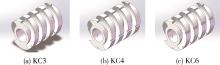
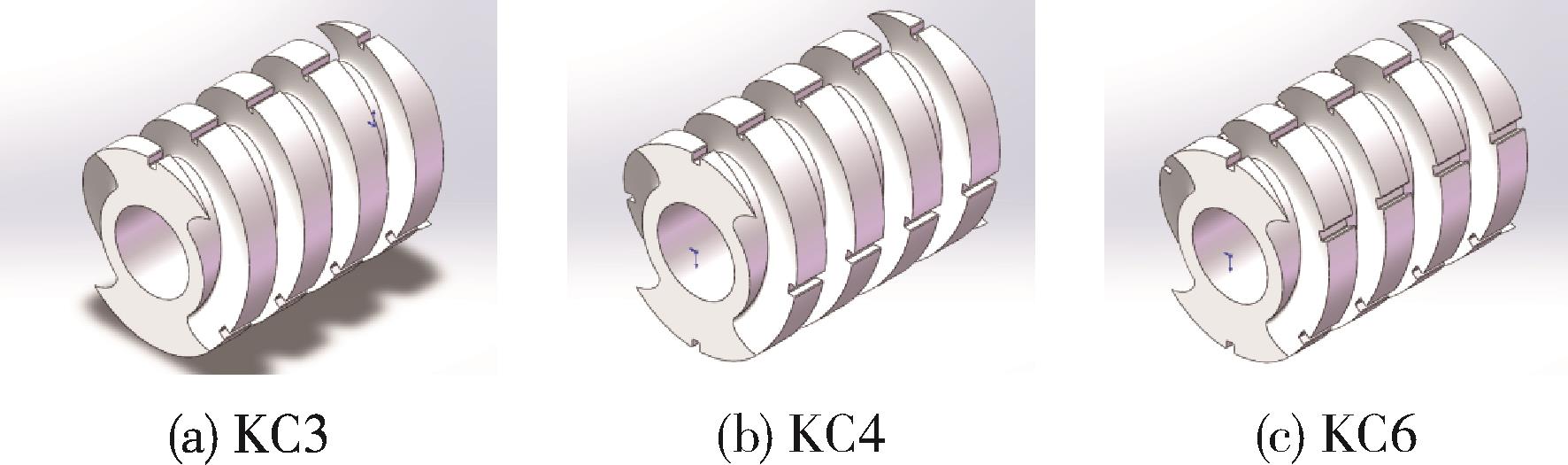
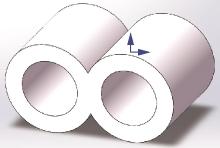

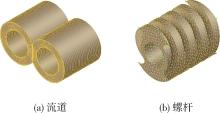





| 时间切片序列 | 双螺杆模型 | |||
|---|---|---|---|---|
| BZ | KC3 | KC4 | KC6 | |
| Slice 0 | 2 000 | 2 000 | 2 000 | 2 000 |
| Slice 1 | 1 574 | 1 553 | 1 565 | 1 573 |
| Slice 2 | 1 559 | 1 532 | 1 549 | 1 558 |
| Slice 5 | 1 528 | 1 491 | 1 516 | 1 513 |
| Slice 10 | 1 464 | 1 422 | 1 422 | 1 441 |
| Slice 20 | 1 400 | 1 342 | 1 356 | 1 354 |
| Slice 30 | 1 345 | 1 301 | 1 304 | 1 300 |
| Slice 45 | 1 332 | 1 270 | 1 281 | 1 269 |
| Slice 60 | 1 319 | 1 252 | 1 268 | 1 242 |
| 时间切片序列 | 双螺杆模型 | |||
|---|---|---|---|---|
| BZ | KC3 | KC4 | KC6 | |
| Slice 0 | 2 000 | 2 000 | 2 000 | 2 000 |
| Slice 1 | 1 574 | 1 553 | 1 565 | 1 573 |
| Slice 2 | 1 559 | 1 532 | 1 549 | 1 558 |
| Slice 5 | 1 528 | 1 491 | 1 516 | 1 513 |
| Slice 10 | 1 464 | 1 422 | 1 422 | 1 441 |
| Slice 20 | 1 400 | 1 342 | 1 356 | 1 354 |
| Slice 30 | 1 345 | 1 301 | 1 304 | 1 300 |
| Slice 45 | 1 332 | 1 270 | 1 281 | 1 269 |
| Slice 60 | 1 319 | 1 252 | 1 268 | 1 242 |


| [1] | 刘丰颉, 李 伟, 彭新洋, 等. 聚乳酸的制备、改性及应用进展研究 [J]. 塑料科技, 2024, 52(5): 156⁃160. |
| LIU F J, LI W, PENG X Y, et al. Preparation, modification and application progress of polylactic acid [J]. Plastics Science and Technology, 2024, 52(5): 156⁃160. | |
| [2] | 商嘉玮, 张丽梅, 黄志刚, 等. 不同螺杆接触状态下异向双螺杆挤出机的流道分布规律 [J]. 食品与机械, 2022, 38(5): 61⁃64. |
| SHANG J W, ZHANG L M, HUANG Z G, et al. Flow channel distribution of anoterous twin⁃screw extruder under different screw contact conditions[J]. Food & Machinery, 2022, 38(5): 61⁃64. | |
| [3] | 马秀清 耿孝正. 啮合异向双螺杆挤出过程轴向循环流道三维流场分析——轴向循环流场分析(Ⅲ) [J]. 中国塑料, 2002 (3): 73⁃80. |
| MA X Q, GENG X Z. Three⁃dimensional flow field analysis of axial circulating flow channel during meshing anisotropic twin⁃screw extrusion——Axial circulating flow field analysis (III.) [J]. China Plastics, 2002(3): 73⁃80. | |
| [4] | 张一明, 黄志刚, 徐 珍, 等. 螺杆构型对啮合异向双螺杆流场影响的仿真分析 [J]. 中国塑料, 2023, 37(10): 131⁃138. |
| ZHANG Y M, HUANG Z G, XU Z, et al. Simulation analysis of the influence of screw configuration on the flow field of meshing heterotropic twin screws[J]. China Plastics, 2023, 37(10): 131⁃138. | |
| [5] | 杨冬冬, 刘江林, 梁建国,等. 开槽螺纹对双螺杆挤出均匀性影响的仿真研究 [J]. 塑料工业, 2023, 51(11): 102⁃108. |
| YANG D D, LIU J L, LIANG J G, et al. Simulation study on the effect of slotted thread on the uniformity of twin⁃screw extrusion [J]. China Journal of Plastics, 2023, 51(11): 102⁃108. | |
| [6] | 代祥基, 刘子豪, 黄志刚. 啮合同向差速双螺杆挤出机挤出聚乳酸流场分析 [J]. 食品与机械, 2024, 40(4): 59⁃64+83. |
| DAI X J, LIU Z H, HUANG Z G. Flow field analysis of polylactic acid extruded by meshing differential twin⁃screw extruder [J]. Food & Machinery, 2024, 40(4): 59⁃64+83. | |
| [7] | 张一明, 黄志刚, 杨亚楠. 不同螺槽深度下异向双螺杆挤出机流道仿真分析 [J]. 食品与机械, 2023, 39(9): 71⁃76+122. |
| ZHANG Y M, HUANG Z G, YANG Y N. Simulation analysis of runner of anisotropic twin⁃screw extruder under different screw groove depths[J]. Food & Machinery, 2023, 39(9): 71⁃76+122. | |
| [8] | 张一惟, 黄志刚, 商嘉玮, 等. 啮合异向双螺杆挤出机中螺杆端面结构参数对聚乳酸流场的影响 [J]. 食品与机械, 2023, 39(4): 71⁃76+88. |
| ZHANG Y W, HUANG Z G, SHANG J W, et al. Effect of screw end face structure parameters on polylactic acid flow field in meshing isotropic twin⁃screw extruder [J]. Food & Machinery, 2023, 39(4): 71⁃76+88. | |
| [9] | 耿孝正. 双螺杆挤出机及其应用 [M]. 北京:中国轻工业出版社, 2003. |
| [10] | 蒋卫鑫, 黄志刚, 赵玉莲, 等. 基于Polyflow田字形网格食品托盘挤出成型分析 [J]. 食品与机械, 2017, 33(12): 86⁃90. |
| JIANG W X, HUANG Z G, ZHAO Y L, et al. Extrusion analysis of food tray based on Polyflow zigzag grid [J]. Food & Machinery, 2017, 33(12): 86⁃90. | |
| [11] | 毕超. Polyflow软件基础及其在双螺杆挤出仿真过程中的应用 [M]. 北京:机械工业出版社, 2018. |
| [12] | 郭树国, 于 淼, 王丽艳, 等. 带有开槽中性捏合块和反向螺纹双螺杆挤出机的三维流场分析 [J]. 沈阳化工大学学报, 2020, 34(4): 358⁃362. |
| GUO S G, YU M, WANG L Y, et al. Three⁃dimensional flow field analysis of twin⁃screw extruder with slotted neutral kneading block and reverse thread [J]. Journal of Shenyang University of Chemical Technology, 2020, 34(4): 358⁃362. | |
| [13] | 张先明. 挤出过程停留时间分布的实验研究和数值模拟 [D], 2008. |
| [14] | 李 振, 相 海, 任嘉嘉, 等. 同向全啮合双螺杆植物蛋白挤出机不同螺杆元件的仿真分析 [J]. 中国油脂, 2024, 49(3): 147⁃152. |
| LI Z, XIANG H, REN J J, et al. Simulation analysis of different screw elements of co⁃rotating full⁃mesh twin⁃screw plant protein extruder [J]. China Oils and Fats, 2024, 49(3): 147⁃152. | |
| [15] | 张一明, 黄志刚, 徐珍, 等. 螺距变化对异向双螺杆挤出机流场影响的仿真分析 [J]. 食品与机械, 2023, 39(10): 93⁃99. |
| ZHANG Y M, HUANG Z G, XU Z, et al. Simulation analysis of the influence of pitch change on flow field of antagonistic twin⁃screw extruder[J]. Food & Machinery, 2023, 39(10): 93⁃99. | |
| [16] | 陈峰峰, 李浩杰, 王一飞, 等. 基于Polyflow的反螺纹元件对粒子分散性仿真研究 [J]. 工程塑料应用, 2021, 49(9): 82⁃86. |
| CHEN F F, LI H J, WANG Y F, et al. Simulation study on particle dispersion of anti⁃threaded components based on Polyflow [J]. Engineering Plastics Application, 2021, 49(9): 82⁃86. | |
| [17] | 田 野, 樊瑜瑾. 双螺杆中啮合块、螺杆元件混合过程及混合性能的研究 [J]. 塑料科技, 2020, 48(1): 5⁃9. |
| TIAN Y, FAN Y J. Study on the mixing process and mixing properties of meshing blocks and screw elements in twin screws [J]. Plastics Science and Technology, 2020, 48(1): 5⁃9. |
| [1] | QIN Xiaoyu, ZHU Xiangzhe, CHEN Bohan, WANG Yuyu. Study on fluid mixing characteristics of parallel differential three⁃screw extruder [J]. China Plastics, 2025, 39(5): 101-106. |
| [2] | TANG Wenliang, YAN Jizhong, SHEN Limin, YANG Hong, WU Shengping, WANG GuoXing. Numerical simulation of PE pipeline damages with synergistic effect of multiple factors [J]. China Plastics, 2025, 39(5): 63-69. |
| [3] | WANG Yu, ZHANG Yajun, ZHENG Yongbiao, GAO Cong. Research progress in of polymer gas⁃assisted extrusion technology and its and applications [J]. China Plastics, 2025, 39(3): 114-117. |
| [4] | ZHAO Lin, YANG Gaopin, YANG Weimin. Research progress in material residence time in plasticizing system of screw extruders [J]. China Plastics, 2025, 39(10): 135-140. |
| [5] | . Research progress in material residence time in plasticizing system of screw extruders [J]. , 2025, (10): 135-140. |
| [6] | ZHAI Menglei, CHEN Wenguang, HUANG Ming, LEI Jinyu, ZHANG Na, LIU Chuntai, GAO Guoli. Calculation method and numerical verification of transverse dynamic permeability in large⁃tow carbon fiber tows [J]. China Plastics, 2024, 38(9): 54-59. |
| [7] | LIN Gaoming, ZHANG Guohui, ZONG Huceng, WANG Chongyang, HE Youfeng, WANG Suwei. Simulation and optimization of key component structure of vertical spiral extrusion filling equipment for polymer⁃based high⁃viscous slurry [J]. China Plastics, 2024, 38(5): 107-112. |
| [8] | CHEN Hao, YANG Weimin, XUN Shanglun, ZHANG Haitao, JIAO Zhiwei. Numerical simulation and experimental study of electromagnetic heating process of twin⁃screw extruder plasticizing system and its applications [J]. China Plastics, 2024, 38(3): 101-108. |
| [9] | ZHOU Lei, ZHANG Lihua, CHEN Gingming, MAO Xu, CHEN Shuguang, QIU Jiancheng. Flow field analysis and design optimization of flow channel of degradable plastic sheet head [J]. China Plastics, 2023, 37(9): 90-95. |
| [10] | MA Xiuqing, LAO Zhichao, LI Mingqian, HAN Shuntao, HU Nan. Effect of screw configuration on performance of PLA/PTW blends [J]. China Plastics, 2023, 37(11): 127-134. |
| [11] | ZHANG Yiming, HUANG Zhigang, XU Zhen, CHENG Yuanyuan. Simulation analysis of the influence of screw configuration on the flow field of meshing twin screw [J]. China Plastics, 2023, 37(10): 131-138. |
| [12] | WANG Dejian, YU Pengfei, DING Yumei, YANG Weimin. Numerical simulation of extrusion flow process of natural polymers in laminated flow channels [J]. China Plastics, 2023, 37(1): 60-65. |
| [13] | ZHAO Hongjing, ZHU Jiang. Study on numerical simulation of two⁃phase extrusion for micro/nano⁃laminated natural rubber/polypropylene [J]. China Plastics, 2022, 36(8): 110-114. |
| [14] | HUANG Xuemei, LIU Hesheng, HUANG Xingyuan, YU Zhong, JIANG Shiyu. Numerical simulation and experimental study on gas⁃assisted extrusion process of U⁃shaped parts [J]. China Plastics, 2022, 36(7): 93-103. |
| [15] | DENG Shixin, WANG Jian, YANG Weimin. Simulation and analysis of fluid high⁃pressure and high⁃speed collision in mixing head cavity of enhanced reaction injection molding machine [J]. China Plastics, 2022, 36(6): 130-136. |
| Viewed | ||||||
|
Full text |
|
|||||
|
Abstract |
|
|||||